Xero + InvoiceNow integration
A landscaping SME had to get onto InvoiceNow, Singapore's national e-invoicing network — but its whole back office ran on software nobody could safely touch. We bridged it into Xero: compliance, cash-flow visibility, and automatic invoice chasing, with zero change to how the team works.
- Services
- Systems & Integrations · IT Modernisation · Fractional CTO
- Engagement
- Ongoing engagement · 2026
- Where it stands
- A full year of invoices migrated and reconciled to the cent — client validating
A Singapore landscaping and plant-supply business ran its entire back office — invoicing, purchases, customers, payroll, recurring invoices — on a custom app built years ago by an outside vendor. Then the vendor disappeared. No support, no documentation, and much of the core encrypted and locked, so even a new developer couldn't read or change it.
The business ran, but blind. At one point the system quietly stopped invoicing for four months — and nobody noticed until the money didn't come in.
A system nobody owned
The software that ran the business belonged, in practice, to no one. It couldn't be read, changed, or trusted — and it had already failed silently once.
A modernisation they couldn't avoid — or afford to disrupt
Singapore's move to InvoiceNow (the national e-invoicing network, being phased in by IRAS for GST-registered businesses) meant they had to get onto a modern, compliant platform like Xero. But their invoicing spans wholesale, services, and projects — each with its own pricing, discounts, and custom line text built up over years. Retraining the team on a new tool was a non-starter.
No line of sight on the money
Cash flow at a glance, which invoices are outstanding, who to chase — the everyday visibility every owner wants, from a system too old and fragile to provide it.
The bind: modernise for compliance and visibility, without disruption and without a dangerous rewrite.


We didn't start with a rebuild. We started with control, then a bridge.
Stabilise the black box
Put the orphaned system under version control, back it up, and document how it actually behaves — then diagnose and fix the silent invoicing failure so it can't fail unseen again.
Leave the workflow untouched
The team keeps invoicing exactly as they do today, in the system they know. Nothing about their day changes.
Bridge the data into Xero automatically
An integration reads every invoice the old system issues and mirrors it into Xero — unlocking InvoiceNow, GST, and reporting — with no double entry.
Handle the bespoke complexity head-on
We turned their free-text plant catalogue into clean, coded products, and mapped every invoice to the right product code and business line — wholesale, services, projects, maintenance — preserving custom pricing, discounts, GST rules, and paid/unpaid status.
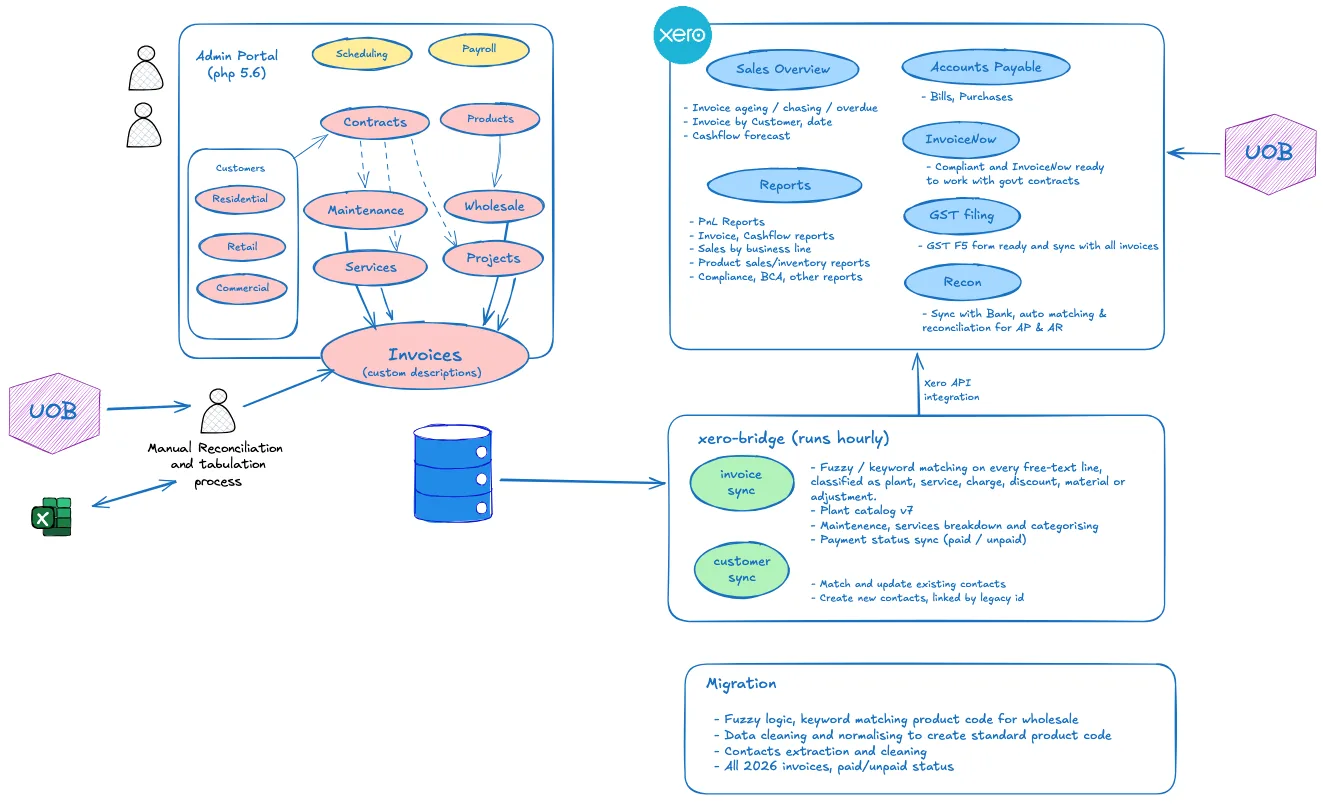
What they got:
- A path to InvoiceNow compliance — via Xero, without changing how they invoice.
- Automatic invoice chasing — Xero's reminders now follow up on outstanding invoices, so nothing slips for four months again.
- Real financial visibility — cash flow, aged receivables (who owes what, who to chase), and sales broken down by product and business line.
- Proven, not hoped-for — an entire year of invoices migrated into a test environment and reconciled to the cent against the old system before anything goes live.


E-invoicing isn't optional any more — InvoiceNow is coming for every GST-registered business. The instinct is to panic-replace the old system. You usually don't have to.
If the software that runs your business is old, bespoke, or built by someone you can no longer reach, the smarter move is to stabilise it, then bridge it forward — get compliant and get visibility, without betting the business on a big-bang switch.
Sounds like your business?
Tell us what you're dealing with — a similar problem, a different one, or an idea of your own. It takes a minute, and it goes straight to Gordon.
More work
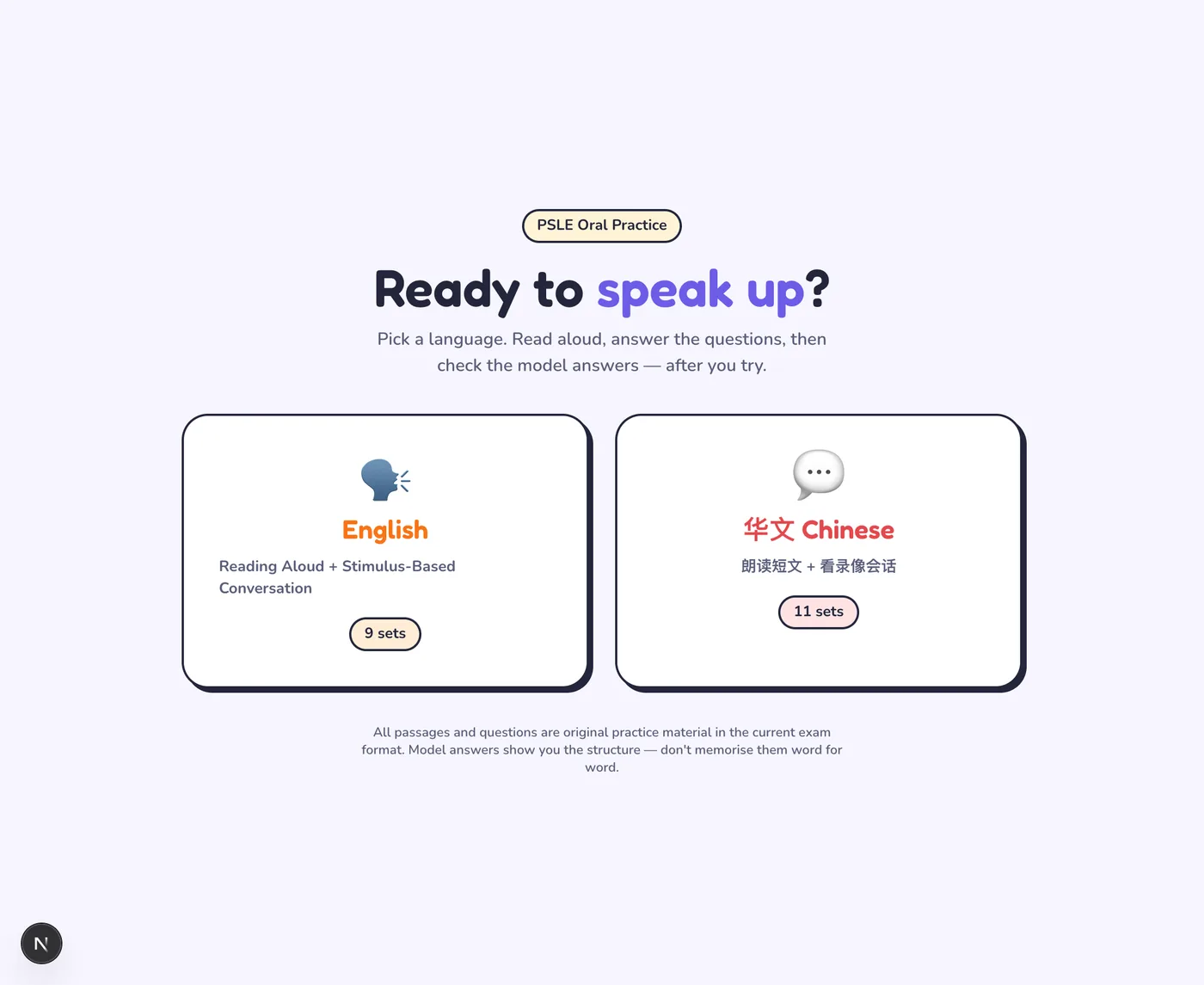
PSLE AI oral practice app

Maths learning app, built from scratch
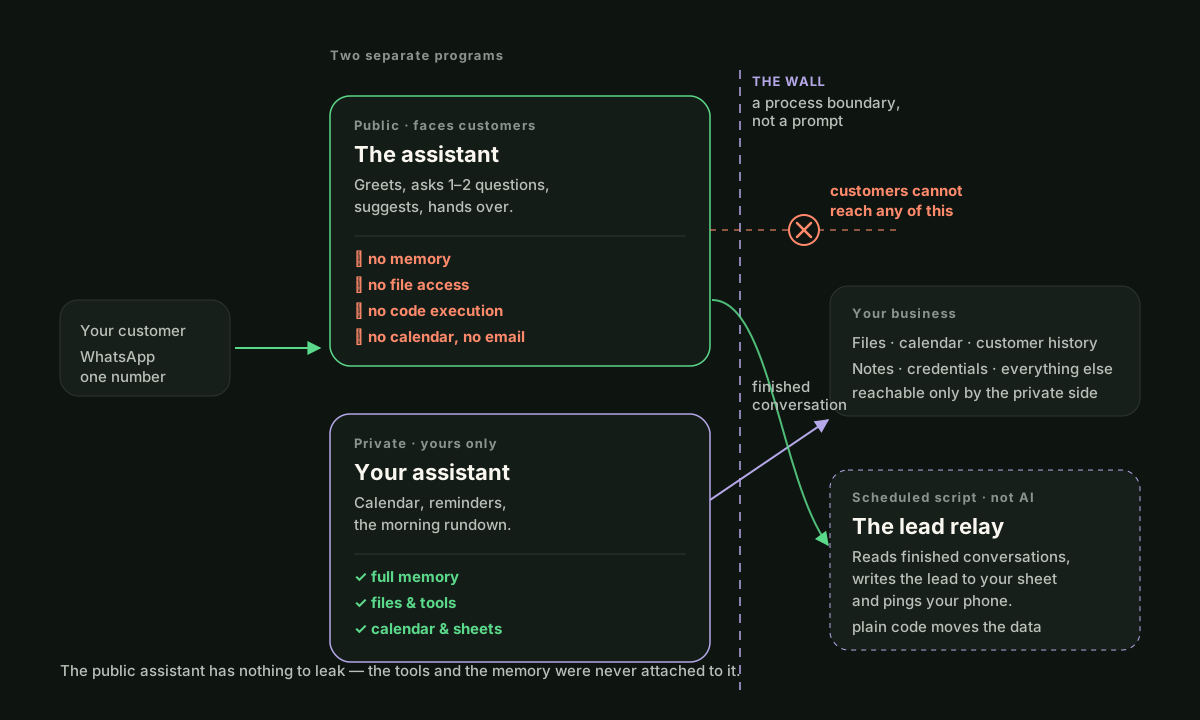
WhatsApp AI agent